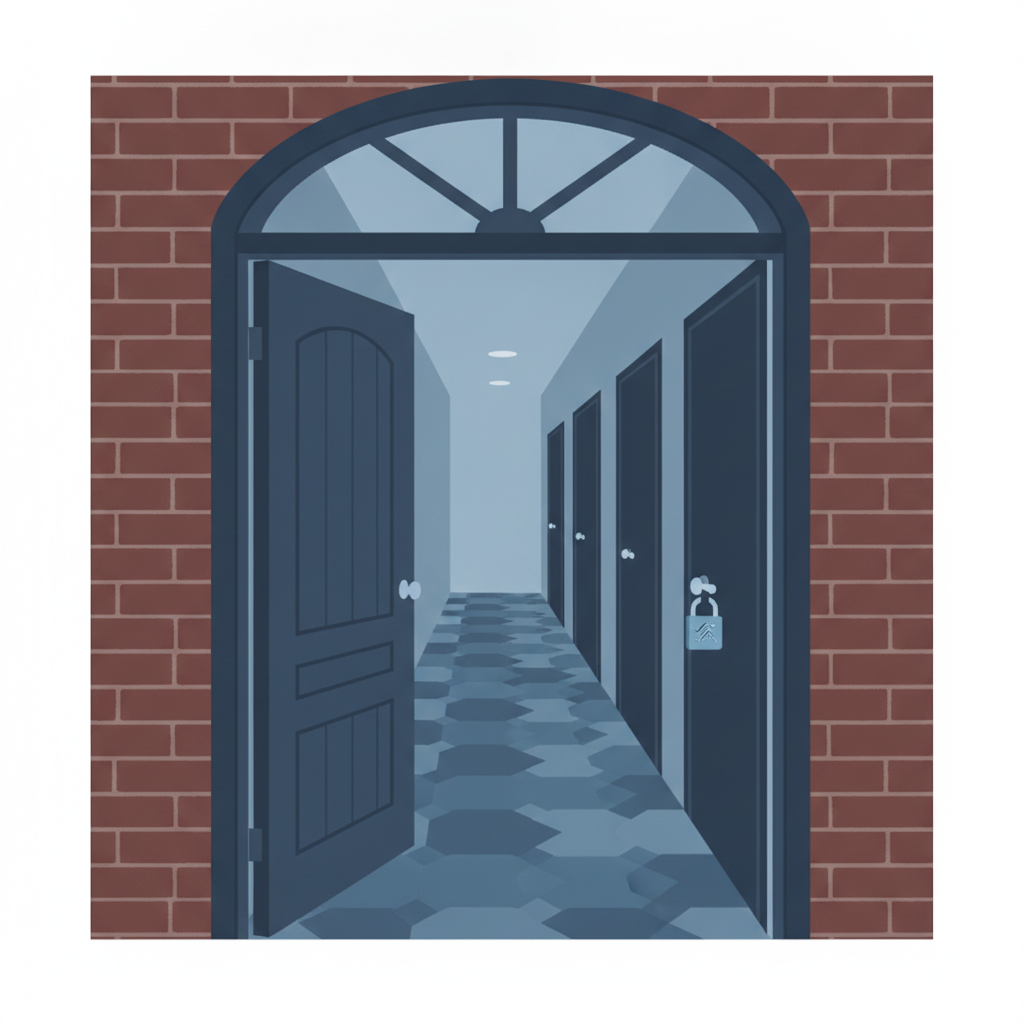
Self-showings work in a duplex or a 12-unit building the same way they work anywhere: verified identity, then access. The difference is that a visitor usually has to clear two doors instead of one — a shared building entry, then the unit itself — and the building's other tenants have a legal right to reasonable use of everything in between.
What's Different About a Small Multi-Unit Building?
A scattered-site single-family showing has one door: the renter arrives, verifies identity, and walks straight in. A duplex-to-12-unit building adds a second door in front of it — a shared entry, lobby or hallway belonging to every tenant, not just the unit being shown. Solve both separately: how the visitor gets through the building's entry, and how they get into the unit. Treating it as one door is where small-building self-showing plans break down.
How Much of the U.S. Rental Stock Is in Multi-Unit Buildings?
About two-thirds of it. Harvard's Joint Center for Housing Studies, tabulating American Community Survey 1-year estimates in America's Rental Housing 2026 (page 15), reports that single-family rentals "still constituted nearly a third (31 percent) of all rentals" in 2024, with large multifamily buildings at 26 percent and small and midsize multifamily at 17 and 22 percent. Add the two middle bands and 2-to-19-unit buildings hold 39% — more than single-family homes or large complexes. The small building is the median case, not the edge case.
| Building type | Share of U.S. rentals, 2024 |
|---|---|
| Single-family (1 unit) | 31% |
| Small multifamily (2–4 units) | 17% |
| Midsize multifamily (5–19 units) | 22% |
| Large multifamily (20+ units) | 26% |
| Manufactured housing | 4% |
How Much Notice Do You Need To Show an Occupied Unit?
This is information, not legal advice — read your own statute before relying on it. If a tenant still occupies the unit, entry-notice rules apply to that unit, and the details differ by jurisdiction. California Civil Code § 1954 permits entry to "exhibit the dwelling unit to prospective or actual purchasers, mortgagees, tenants, workers, or contractors," presumes 24 hours' written notice reasonable, and restricts entry to normal business hours unless the tenant consents at the time of entry. Its oral-notice shortcut in § 1954(d)(2) covers showings to purchasers only — not prospective tenants. British Columbia's Residential Tenancy Act, s. 29(1)(b), requires written notice at least 24 hours and not more than 30 days ahead, stating a reasonable purpose, with entry between 8 a.m. and 9 p.m. "unless the tenant otherwise agrees" — and s. 29(1)(a) separately allows entry where the tenant gives permission at the time of entry or up to 30 days before. Our showing-notice template covers the wording each statute expects.
What About the Other Tenants in the Building?
They aren't part of the tenancy being shown, but they hold rights over the space the visitor walks through — the part nobody drafts for. BC's Residential Tenancy Act, s. 28, entitles every tenant to "reasonable privacy," "freedom from unreasonable disturbance," and "use of common areas for reasonable and lawful purposes, free from significant interference." One verified visitor crossing a shared hallway is the kind of reasonable, lawful common-area use that section contemplates — the same traffic an agent-led tour already generates. What self-showings change is frequency and timing control: keep showings inside reasonable hours and space them out, and hallway traffic stays well inside what the statute allows.
LetHub verifies identity and issues access to the unit itself before a self-showing starts, on smart lockboxes or the plain offline lock already on that unit's door. The building's shared entry is a separate mechanism you still need a plan for — a code given to the visitor, a propped door during a window, a call box — and verified access to the unit does not substitute for it. Book a demo to see the unit-access side on your own listing.
Frequently Asked Questions
Can you run self-showings in a small apartment building?
Yes. The mechanics are the same as any self-showing — verified identity, then access — but plan for two doors instead of one: the building's shared entry and the specific unit. Solve building access separately from unit access rather than assuming one covers the other.
Do you need to notify a tenant before showing their occupied unit to a prospective renter?
Yes, if a tenant still occupies it. California presumes 24 hours' written notice reasonable to exhibit a unit to a prospective tenant; British Columbia requires at least 24 hours' written notice of a reasonable purpose, entry between 8 a.m. and 9 p.m. California's oral-notice shortcut covers purchaser showings only; BC has none, though both recognise tenant consent. Information, not legal advice.
Does a self-showing visitor violate other tenants' quiet enjoyment?
Not inherently. BC's Residential Tenancy Act protects tenants' use of common areas "free from significant interference," and a single verified visitor passing through to a showing fits that standard — the same traffic an agent-led tour creates. Keep showings during reasonable hours and avoid clustering them to stay well within it.
How much of the U.S. rental stock is in multi-unit buildings?
About two-thirds. Harvard's Joint Center for Housing Studies put single-family homes at 31% of U.S. rentals in 2024, with 17% in 2-to-4-unit buildings, 22% in 5-to-19-unit buildings, 26% in buildings of 20 units or more and 4% manufactured. Small and midsize buildings together hold 39% — more than either end of the range.